AMS Our Changing Climate

5.4 Learn more about adiabatic processes
In the atmosphere, cooling by expansion and compressional warming of unsaturated air are essentially adiabatic processes. As an air parcel ascends or descends within the atmosphere, it is assumed that no heat is exchanged between the air parcel and the surrounding (ambient) air. This understanding enables atmospheric scientists to precisely calculate changes of air parcel temperatures as they ascend or descend within the atmosphere, if their water vapor content is also known (e.g., are they unsaturated or saturated?). As shown in Figure 1, ascending unsaturated (clear) air parcels cool at the dry adiabatic lapse rate of 9.8 °C per 1000 m (5.5 °F per 1000 ft.).
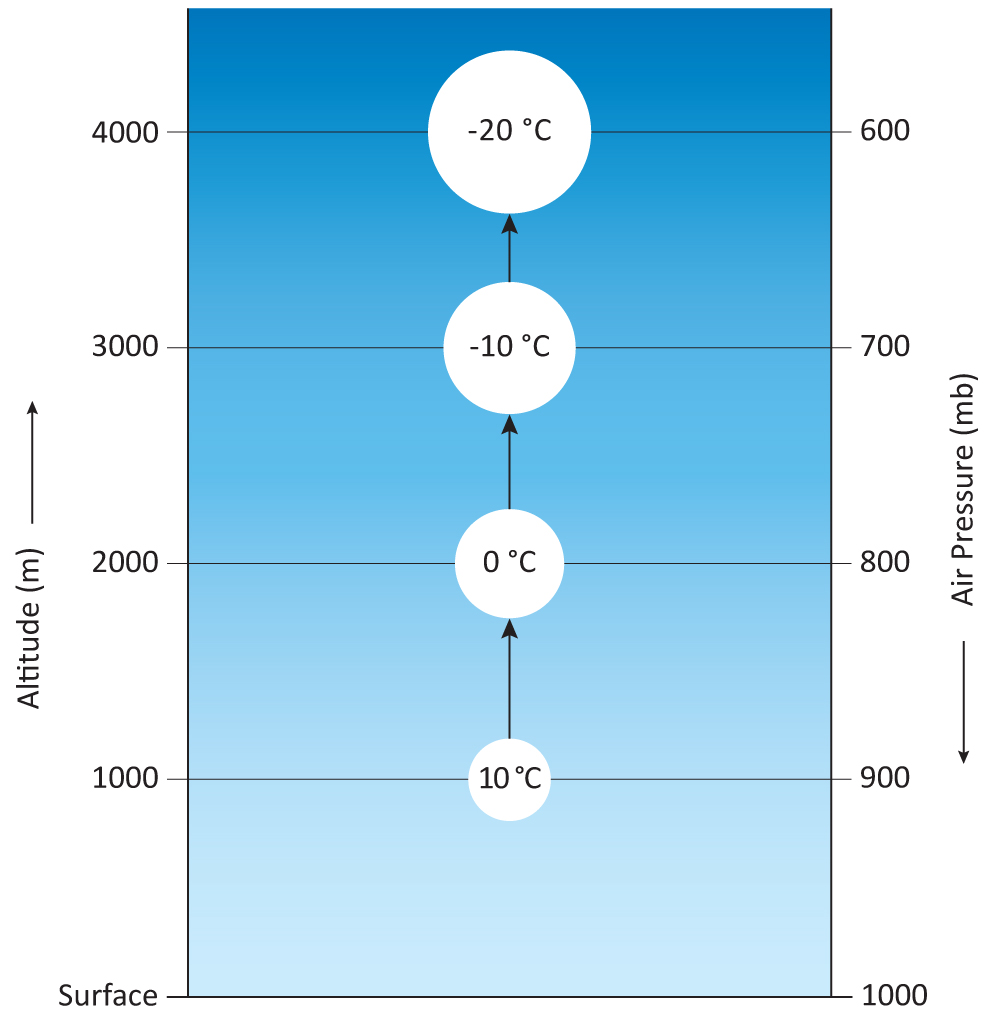
Figure 1: The dry adiabatic lapse rate describes the cooling by expansion of ascending unsaturated (clear) air parcels.
Descending clear air parcels warm at the same rate. Condensation and deposition (cloud formation) that accompany the ascent of saturated air parcels release latent heat, which partially offsets cooling by expansion. Hence ascending saturated air parcels cool at the lower moist adiabatic lapse rate, averaging about 6 °C per 1000 m (3.3 °F per 1000 ft.).
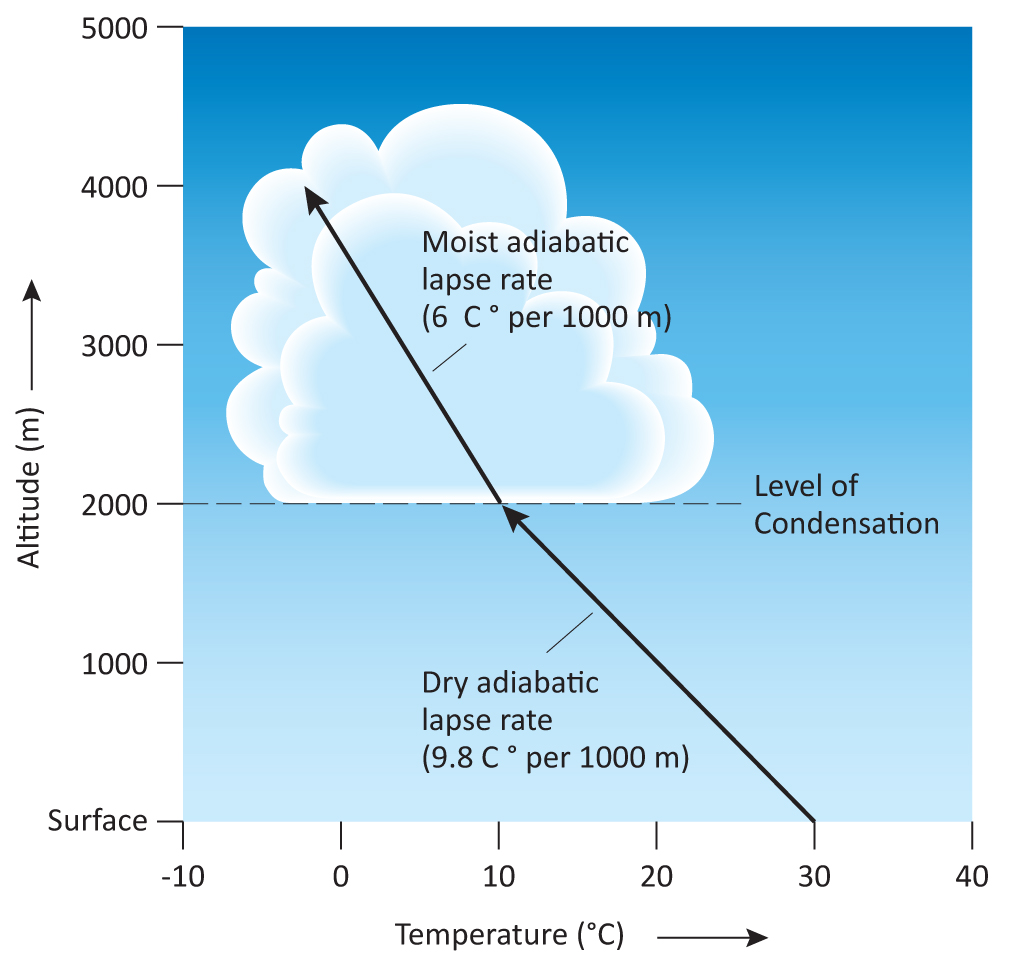
Figure 2: Ascending unsaturated (clear) air parcels cool at the dry adiabatic lapse rate whereas ascending saturated (cloudy) air parcels cool at the smaller moist adiabatic lapse rate.